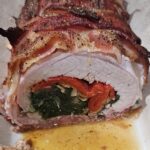
Typically slow-cooked, the flavors of pork and sauerkraut meld over hours. Recipes vary by family, but some include additions like apples, onions, or even brown sugar to balance the sauerkraut’s tang. Served with mashed potatoes or dumplings, it’s a hearty meal designed for cold days and full bellies.
Pork and Sauerkraut – A Pennsylvania Dutch Tradition
For generations, pork and sauerkraut have been more than a meal—it’s been a symbol of hope, prosperity, and community for the Pennsylvania Dutch. Eaten traditionally on New Year’s Day, this humble yet flavorful dish is rooted in the belief that it brings good luck for the year ahead. The pig, which roots forward as it eats, represents progress. Sauerkraut, made from finely shredded fermented cabbage, symbolizes wealth through its many strands.
This regional custom reflects the resourceful, agrarian lifestyle of the Pennsylvania Dutch people. Sauerkraut was a natural choice in winter, as it preserved cabbage for months without refrigeration. Pork was plentiful during colder months when hogs were slaughtered and stored.
Typically slow-cooked, the flavors of pork and sauerkraut meld over hours. Recipes vary by family, but some include additions like apples, onions, or even brown sugar to balance the sauerkraut’s tang. Served with mashed potatoes or dumplings, it’s a hearty meal designed for cold days and full bellies.
More than just a recipe, it’s a legacy—comforting, time-tested, and rich in meaning.
Exploring Pennsylvania Dutch Culture Through Food
The Pennsylvania Dutch culture, originating from German-speaking immigrants who settled in Pennsylvania in the 17th and 18th centuries, is deeply entwined with tradition, simplicity, and food preservation. Among their most celebrated dishes is pork and sauerkraut, a culinary symbol of abundance and community.
The people who make up this group—primarily Amish and Mennonite communities—have preserved a rural, agrarian lifestyle that values thrift, hard work, and family ties. Their food mirrors these values: hearty, locally sourced, and made from scratch. Dishes like shoofly pie, scrapple, and chicken pot pie are all staples, reflecting both ingenuity and resilience.
Fermented foods, particularly sauerkraut, play a significant role in Pennsylvania Dutch cuisine. Long before refrigeration, cabbage was harvested in bulk and preserved through fermentation, offering valuable nutrients in the winter. Pork, often from home-raised hogs, provided protein and was used from snout to tail with minimal waste.
Today, enjoying pork and sauerkraut connects people to this culture’s enduring spirit. It’s served not just as sustenance, but as a continuation of a way of life centered on family, faith, and the land.
Irish Potato Famine
Across Pennsylvania and beyond, New Year’s Day is marked with the comforting aroma of pork and sauerkraut wafting from kitchens. While the foundational elements—slow-cooked pork and tangy cabbage—remain constant, families often introduce their own regional or creative variations to make the dish their own.
Some prefer pork loin or pork shoulder, while others incorporate bacon or kielbasa for added depth. Apples are a common addition, offering sweetness that balances sauerkraut’s sourness. Others use brown sugar or apple cider to temper the sharp tang and add richness. A sprinkle of caraway seeds is often included to enhance the fermented cabbage’s complexity.
For an extra twist, roasted red peppers and wilted greens like spinach or arugula can be folded in, bringing color and texture to the dish. In areas with a strong Eastern European influence, the recipe may resemble bigos, or “hunter’s stew,” incorporating mushrooms, onions, and even smoked meats.
Whether traditional or modern, pork and sauerkraut remain a symbol of hope and abundance; these variations celebrate both family heritage and culinary creativity, proving that even time-honored dishes can evolve with grace.
All About Pork and Sauerkraut’s Star Ingredients
Understanding the key components of pork and sauerkraut begins with a closer look at the ingredients themselves. Pork, primarily when slow-cooked, is known for its ability to absorb flavors while staying tender and juicy. Cuts like pork shoulder or pork belly are favored for their marbling, which melts during cooking and adds richness to the dish.
Then there’s sauerkraut—a fermented food with centuries of history. Made from finely shredded cabbage fermented in salt, sauerkraut is a natural probiotic powerhouse. It’s not just tangy and bright; it’s also full of beneficial bacteria that aid digestion and boost gut health. Sauerkraut’s acidity complements pork’s richness, making the pairing both flavorful and nutritionally balanced.
This dish also often features supporting ingredients like garlic, caraway seeds, or smoky bacon, each enhancing the core flavors. When wilted greens like spinach or arugula are added, they bring earthiness and vibrant color.
Together, pork and sauerkraut form a dynamic duo that’s deeply satisfying. More than just comfort food, it’s a nutritional powerhouse with depth of flavor that’s both familiar and endlessly adaptable.
Pork and Sauerkraut
Ingredients
- 1.5 lbs pork
- 1.75 lbs Bacon
- 3 each Red Pepper previously roasted, peeled and seeded
- 12 oz sauerkraut drained
- 10 oz baby spinach/arugula wilted, in microwave 90 seconds
Instructions
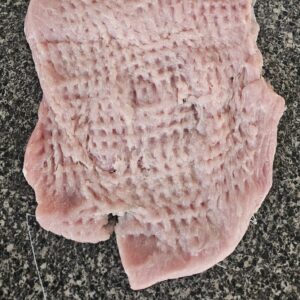
- Take Pork loin, split down the middle to 1/2 in thickness, take knife and travel parallel on pork to open up evenly, then pound with a meat mallet
- in the center mass of evenly pounded pork, layer roasted red pepper, then drain sauerkraut down the center, leave room to roll up pork on either side
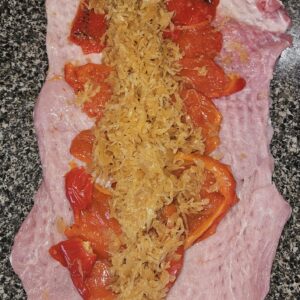
- on top of the sauerkraut add the previously wilted spinach
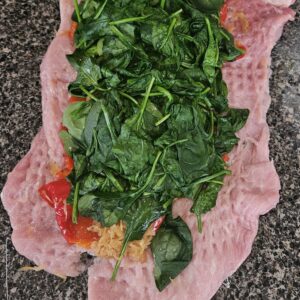
- take the far edge, on the long way, and roll up the pork, keeping the stuffed contents down the center
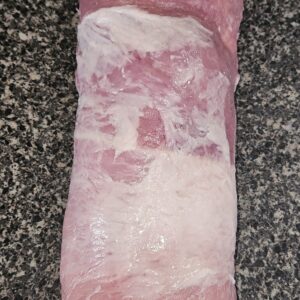
- build a lattice to wrap around the exterior of the pork, on a layer of plastic wrap, start as shown
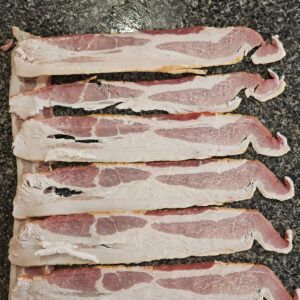
- pull back every other strip of bacon and layer a new piece, weave in
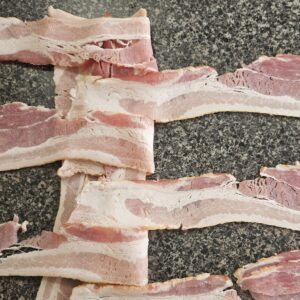
- alternate the bacon like so
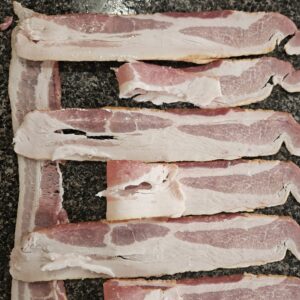
- When finished it should look like this
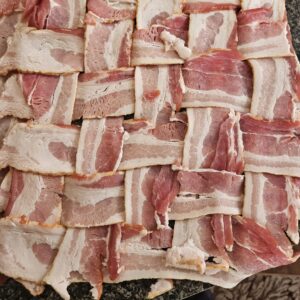
- proceed to place lattice on rolled pork loin, tighten bacon straps for cooking
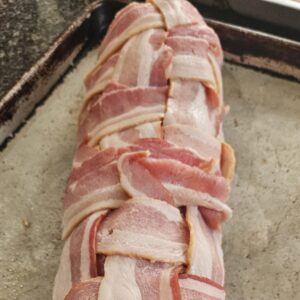
- place in preheated 475 oven for minutes

- cook an additional 5 minutes at 475, depending on how quick it is browning , you may want to eliminate this time frame to get the internal temperature to 145 and the bacon browned nicely.

- Your goal is to get the pork cooked to 145 degrees fahrenheit, and get the bacon crispy browned
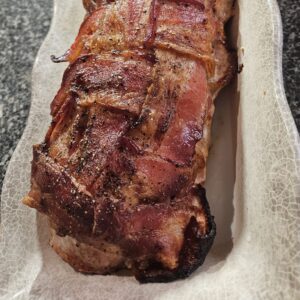
- once cooked remove from the oven
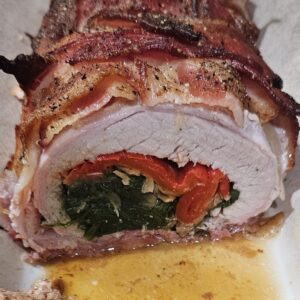
- Serve with whipped potato for a Pennsylvania Dutch pork and sauerkraut New Years day meal