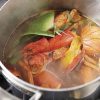
Lobster stock may begin with simple ingredients—lobster shells, onions, celery, carrots, herbs—but its potential in the kitchen is extraordinary. Once the shells are roasted to bring out a deep, caramelized flavor, they are gently simmered with aromatics to extract every nuance of sweetness and brininess. The result is a richly flavored base that can enhance both traditional and contemporary dishes.
The Humble Beginnings of Lobster
Lobster stock may be seen today as a gourmet ingredient, but the story of lobster itself begins far from fine dining. In colonial New England, lobsters were so plentiful that they washed up on shore in massive numbers after storms. Instead of being prized, they were considered a lowly food source, often used to feed prisoners, apprentices, and even livestock. Records from the 17th and 18th centuries show that inmates in Massachusetts protested against being served lobster more than twice a week, viewing it as a sign of poverty and punishment.
As shipping and preservation methods improved in the 19th century, perceptions began to shift. Canned lobster found its way into markets across America, and eventually, the luxury of fresh lobster was embraced by high society. From there, the demand grew, and so did culinary creativity, leading to the development of refined preparations such as lobster bisque, butter-poached lobster, and lobster stock.
The use of lobster stock allowed chefs to capture the shellfish’s distinct sweetness and depth, turning what was once dismissed as “poor man’s food” into a culinary treasure. Today, lobster stock forms the foundation for elegant soups, risottos, and sauces, adding richness and complexity that elevate any dish it touches.
The Versatility of Lobster Stock
Lobster stock is one of the most adaptable ingredients in the seafood kitchen. Its rich, aromatic profile makes it a perfect foundation for countless dishes, from classic lobster bisque to creamy seafood chowders. The stock also pairs beautifully with rice-based dishes such as paella or risotto, infusing each grain with a deep shellfish essence.
Beyond traditional recipes, lobster stock works wonderfully in modern, creative cooking. It can be reduced to create an intense glaze for grilled fish or used as the liquid base in a seafood pasta sauce. Mixing lobster stock into mashed potatoes or polenta adds subtle oceanic undertones that complement roasted fish or scallops.
Because lobster stock is made primarily from shells and aromatics, it is both economical and sustainable. It allows chefs to maximize every part of the lobster, minimizing waste while maximizing flavor. This makes it a staple not just in fine dining but also in home kitchens where efficiency and flavor are equally important.
Whether used in a rustic fisherman’s stew or an elegant French sauce, lobster stock delivers unmatched depth and versatility. It’s a reminder that the most extraordinary flavors often come from humble, resourceful beginnings.
From Prison Fare to Culinary Prestige
Lobster stock embodies a transformation in the way we view lobster itself. In early American history, lobsters were so abundant along the Northeast coast that they were a typical, cheap food given to indentured servants and prisoners. Colonial laws sometimes set limits on how often lobster could be served to inmates, reflecting its status as a despised staple.
The change came in the mid-19th century, when advances in railway transportation allowed fresh lobster to reach inland cities. Demand from urban fine-dining restaurants grew, and lobster was rebranded as a delicacy. With this shift, lobster stock became a sought-after ingredient, valued for the sweet, briny richness it brought to broths and sauces.
Culinary professionals discovered that the shells, once discarded, were perfect for making an intensely flavored lobster stock. By roasting the shells with aromatics and simmering them, they could extract every ounce of flavor, creating a base for lobster bisque, seafood stews, and luxurious pasta sauces.
What was once a food of disdain transformed into one of sophistication. Today, lobster stock is as likely to appear in a Michelin-starred kitchen as it is in a coastal home kitchen, proving how dramatically perceptions can change over time.
The Ingredient that Elevates Every Dish
Lobster stock may begin with simple ingredients—lobster shells, onions, celery, carrots, herbs—but its potential in the kitchen is extraordinary. Once the shells are roasted to bring out a deep, caramelized flavor, they are gently simmered with aromatics to extract every nuance of sweetness and brininess. The result is a richly flavored base that can enhance both traditional and contemporary dishes.
Historically, lobsters themselves were so plentiful in New England that they were fed to prisoners and the poor, a far cry from the luxury status they hold today. This shift in perception also elevated lobster stock from a thrifty byproduct to a prized culinary tool.
In French cuisine, lobster stock is often transformed into bisque, enriched with cream, sherry, and butter. In Italian cooking, it can serve as the flavorful base for seafood risotto or linguine ai frutti di mare. In modern fusion dishes, chefs might blend lobster stock with coconut milk, lemongrass, and chili for a Southeast Asian-inspired soup.
The beauty of lobster stock lies in its ability to carry the essence of the sea into every dish it touches. It has traveled a long road from humble origins to its place as a symbol of culinary refinement.
Lobster Stock
Ingredients
- 4 each lobster bodies and shells (meat previously removed)
- 2 each tomatoes 1/2'd (or 2 oz. tomato paste)
- 1 cup mushroom
- 2 each celery
- ½ cup sherry or brandy
Instructions
- Sautee lobster bodies in a stock pot, add vegetables, brown all
- Add sherry or brandy
- Add 6 quarts of water (if you have recently boiled lobsters, you could reserve the broth from cooking them and add it here. Make sure you cool the a from cooking the lobsters appropriately until you make this stock.)
- Simmer about 1.5 hours
- Strain remaining liquid from the pot into a 3-quart pot, or large enough to hold it.
- Cool down the stock, place pot in the sink with water that reaches halfway up the pot, add ice to drop the water temperature as cold as possible. Ideally, you want to get stock down to 70 degrees in 2 hours and down to under 40 in 4 additional hours.
- refrigerate or freeze until used.