
San Francisco-style cioppino is more than just a seafood stew—it’s a culinary tradition rooted in the city’s maritime history. Born on the docks of Fisherman’s Wharf, this flavorful dish was created by Italian immigrant fishermen who used whatever catch they had leftover at the end of the day. Combining fresh seafood with tomatoes, wine, and spices, they cooked the stew over open fires, sharing it with family and neighbors.
Classic Seafood Cioppino Seafood Stew
Cioppino is a hearty, Italian-American seafood stew that originated in San Francisco in the late 1800s. Created by Italian fishermen who settled in the North Beach neighborhood, cioppino was traditionally made from the catch of the day, combining whatever seafood was available with tomatoes, wine, and herbs. The result is a flavorful, rich stew that has become a classic in coastal kitchens nationwide.
A traditional cioppino recipe starts with a base of aromatic vegetables—usually onions, garlic, and fennel—sautéed in olive oil. Crushed tomatoes and a mix of white wine and seafood stock are added to create a savory broth. The key to an authentic cioppino lies in the seafood: mussels, clams, shrimp, scallops, calamari, and chunks of firm white fish such as halibut or cod. The variety adds layers of flavor and texture to the dish.
Timing is everything when cooking cioppino. The seafood is added in stages, based on the cooking time of each type. Shellfish are added first to open and infuse the broth, followed by more delicate pieces like shrimp and fish. A generous sprinkle of fresh parsley and a dash of red pepper flakes add brightness and warmth.
Cioppino is best served with crusty sourdough bread, which is perfect for sopping up the rich, tomato-based broth. Whether made for a festive gathering or a cozy night in, this classic seafood stew brings the flavors of the sea straight to the table in every delicious spoonful.
San Francisco Style Cioppino
San Francisco-style cioppino is more than just a seafood stew—it’s a culinary tradition rooted in the city’s maritime history. Born on the docks of Fisherman’s Wharf, this flavorful dish was created by Italian immigrant fishermen who used whatever catch they had leftover at the end of the day. Combining fresh seafood with tomatoes, wine, and spices, they cooked the stew over open fires, sharing it with family and neighbors.
What sets San Francisco cioppino apart is its bold yet balanced flavor profile. The stew begins with a sofrito-like base of onions, garlic, and sometimes green peppers, which are slowly sautéed in olive oil. From there, crushed tomatoes, fish stock, and white or red wine are added to build a rich, tangy broth. Seasonings like oregano, bay leaves, and chili flakes bring in an earthy, spicy note.
Seafood is the soul of this dish. Local Dungeness crab is often the star, complemented by clams, mussels, shrimp, scallops, and chunks of white fish, such as sea bass or cod. Each piece is cooked just until tender, ensuring the texture stays firm and succulent.
The final touch is serving the cioppino piping hot in large bowls, often with a piece of grilled sourdough bread on the side. This rustic presentation captures the spirit of San Francisco’s working-class fishermen and their ingenuity. Today, the dish is a staple in the city’s restaurants and a beloved part of holiday celebrations, showcasing the region’s coastal bounty in a comforting and memorable way.
Easy Homemade Cioppino
Making cioppino at home might sound like a gourmet endeavor, but it’s surprisingly straightforward and incredibly rewarding. This seafood stew combines the vibrant flavors of the ocean with a rich, tomato-based broth—all in one comforting dish. With a bit of planning and fresh ingredients, anyone can recreate this restaurant-worthy meal in their own kitchen.
The process begins with a flavorful base. Start by sautéing onions, garlic, and a bit of fennel in olive oil until they’re soft and fragrant. Add crushed tomatoes, a splash of dry white wine, and seafood stock to form the base of the stew. Simmer this mixture to allow the flavors to develop. For extra depth, you can add a touch of tomato paste, bay leaves, and dried herbs like thyme and oregano.
When it comes to seafood, simplicity and freshness are key. Choose a combination that suits your taste—shrimp, clams, mussels, white fish, and scallops are all excellent options. Add the shellfish first so they have time to open and infuse the broth. Follow with the more delicate seafood, letting everything cook just until tender.
Homemade cioppino is best enjoyed with warm, crusty bread to soak up the savory broth. For a touch of elegance, sprinkle chopped parsley or drizzle a little olive oil on top before serving.
Whether you’re cooking for a special occasion or a relaxing weekend dinner, this homemade version delivers rich, layered flavors with minimal fuss. It’s a showstopper dish that’s easier to prepare than you might think.
Cioppino with Fresh Shellfish
Cioppino with fresh shellfish is a celebration of the sea’s finest offerings. This iconic seafood stew thrives on the quality and variety of its ingredients, with shellfish playing a starring role. When prepared with care, cioppino becomes a richly flavored, aromatic dish that’s both rustic and elegant.
Fresh shellfish bring both taste and texture to cioppino. Mussels and clams, when steamed in the tomato and wine broth, open up and release their natural juices, enhancing the base with a briny sweetness. Dungeness crab adds body and richness, especially if you crack the shells slightly to let the juices mingle with the stew. Shrimp and scallops contribute a firm yet tender bite that contrasts beautifully with the soft fish chunks.
To highlight the shellfish, begin by preparing a savory broth with onions, garlic, and fennel cooked in olive oil. Add tomatoes, wine, and seafood stock, then let it simmer to develop depth. Introduce the shellfish in stages—starting with the crab and clams, then the mussels and shrimp—to ensure everything is cooked just right.
Serving cioppino with shellfish is as much about presentation as it is about flavor. The vivid colors of the shellfish against the deep red broth make it visually appealing, while the scent of herbs and ocean brine wafts through the air. A sprinkle of fresh parsley and a wedge of lemon further elevate the dish.
Whether you’re preparing it for a family feast or a festive dinner, cioppino, packed with fresh shellfish, delivers both comfort and a taste of the coast in every bite.
Cioppino
Ingredients
- 2½ oz Tomato Diced
- 2½ oz Peppers Diced
- 2 oz onion Diced
- 1 tbsp garlic finely chopped
- 1 tbsp pepper serrano, deseesed, chopped use gloves to handle
- 2 tbsp parsley chopped
- 12 each clams small-sized, with the shell on, washed, fresh or frozen, or clam meat
- 12 each mussels cleaned, fresh, or frozen
- 8 each shrimp 16-20 per/lb size or larger
- 8 oz salmon cut into 1 oz. chunks, skinless, boneless
- 8 oz cod cut into 1 oz. chunks, skinless, boneless
- 32 oz Seafood Stock
- 8 each crostinis grilled oblong rounds of bread
Instructions
- In a saute pan on medium-high heat, saute, garlic, tomato, peppers, onion, garlic, stir, or toss for 2-3 minutes until tender
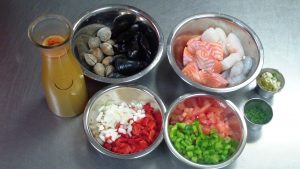
- Move vegetables to the edges of the pan or remove them as you prefer. Turn the heat to high and add shrimp, salmon, cod to the center of the pan. Season with salt and pepper, add mussels and clams and cook for 2 -3 minutes. Turn them over, season this side, and cook 2 -3 minutes longer. Covering may help the clams and mussels cook. (the shells should pop open)
- In the stockpot, you should have the seafood stock hot, adjust any seasonings. Add some of the parsley. Add seafood to the stockpot, leave the heat on low. Adjust your seasonings
- Serve in bowls with Crostinis and some parsley